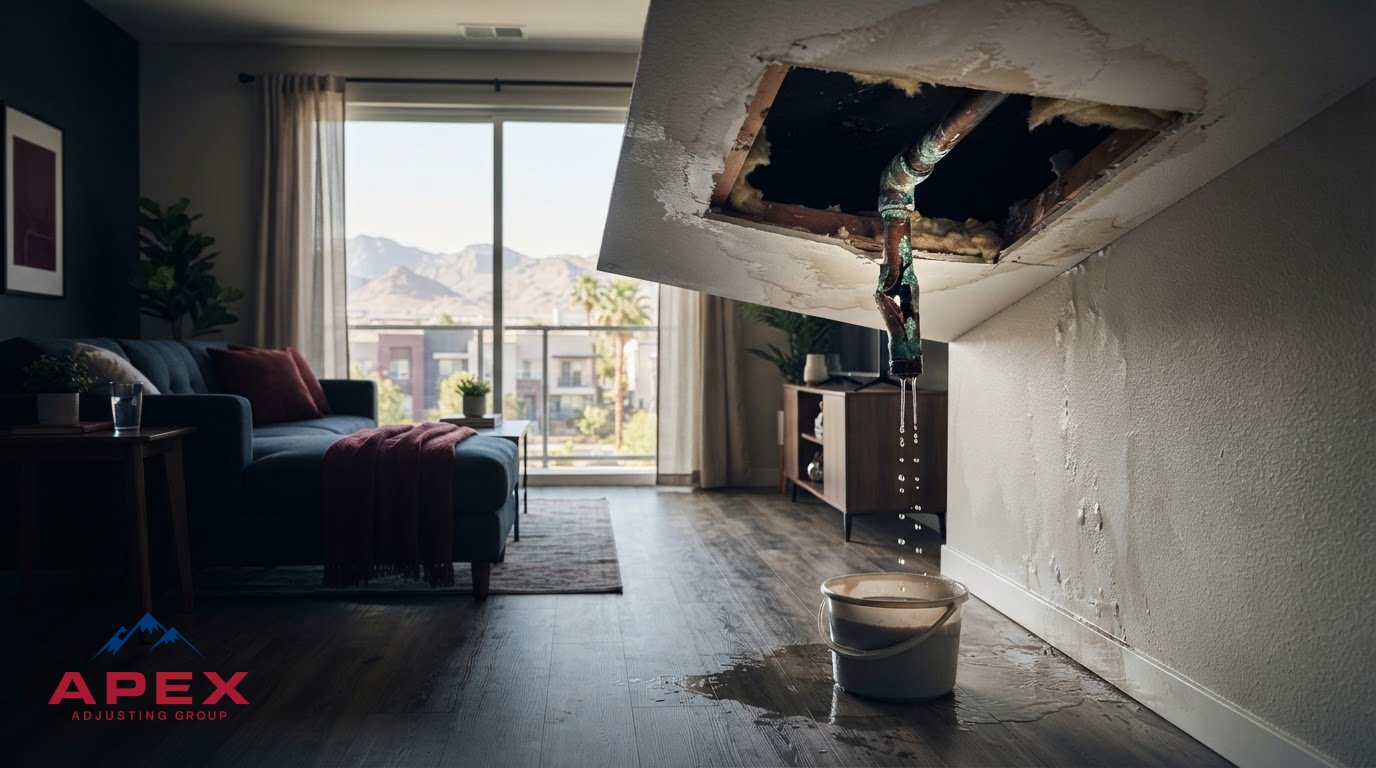
Navigating a commercial flood damage insurance claim in Edmonds, WA, often turns on one key distinction: standard commercial property insurance generally excludes flood damage, so flood losses usually require separate coverage. Commercial property policies may cover other water damage, such as a burst pipe or damaged roof, depending on the policy and how the water entered.
It’s easy to assume that all water damage falls under the same coverage. It doesn’t. The water source, damaged property, and policy exclusions and limits all matter when a business files a claim, and navigating these complexities is where professional support from Apex Adjusting Group proves invaluable.
This article explains what commercial property and NFIP policies may cover, how flood damage differs from other water losses, and what to document when preparing and filing a claim. It also explains where limits may apply, including to business contents and below-ground areas, so Edmonds business owners can better identify the issues that need attention.
Key Takeaways
- Separate flood damage from other water losses: the water source and policy wording can determine which coverage applies.
- Review NFIP commercial limits for building and contents coverage, and pay close attention to restrictions for below-ground areas.
- Document the damage before cleanup when safe, including affected inventory, equipment, building areas, and emergency work.
- Keep repair and restoration records organized to support the claim and clarify what costs are being submitted.
- Compare the adjuster’s damage assessment with your records and policy provisions, especially when the claim is delayed or appears incomplete.
What is covered under a commercial property insurance policy?
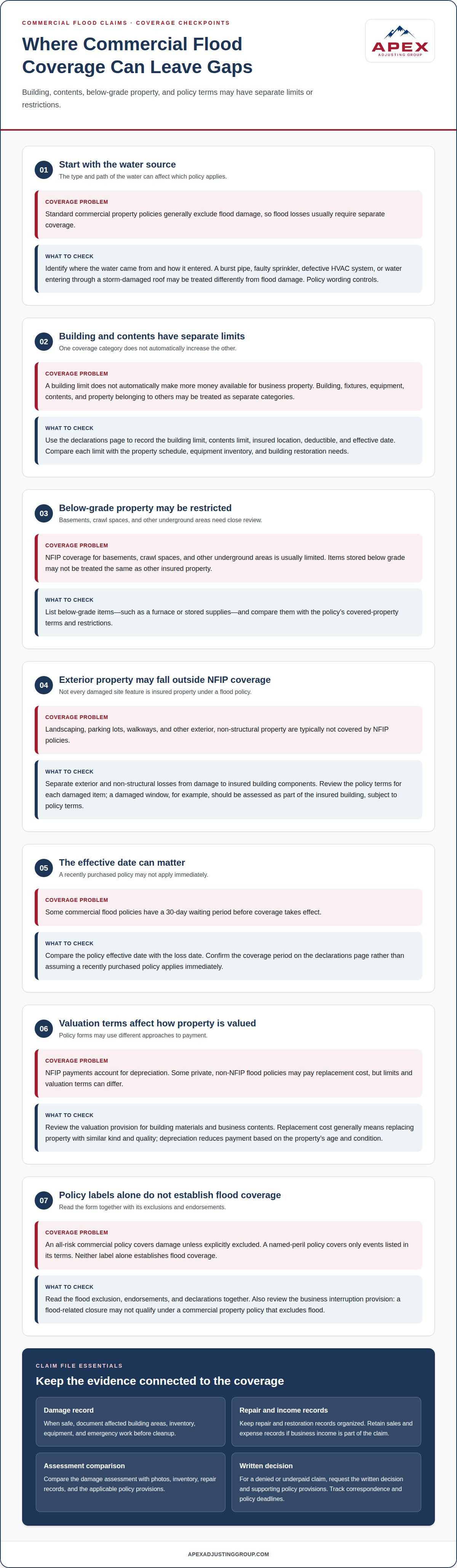
Coverage depends on the water source, the damaged property, and the policy wording. Separate flood insurance may be necessary because standard commercial property policies generally exclude flood damage.
Buildings and Business Contents
Commercial property coverage may protect a business building, fixtures, equipment, contents, and property belonging to others. Review the declarations and property definitions to see which locations and items are insured. For example, a damaged refrigeration unit and the inventory it holds may fall under separate property categories.
Commercial flood insurance costs in Edmonds depend on factors such as the building, location, business type, and selected limits. Covered property and the deductible also affect the premium.
Business Interruption Coverage
Business interruption coverage may replace lost income when a covered loss temporarily prevents operations. The policy trigger matters: a flood-related closure may not qualify under a commercial property policy that excludes flood. Review the business interruption provision alongside the flood policy, including its covered causes, income calculations, waiting periods, and limits. Keep sales and expense records to support the income calculation.
Water Damage and Flood Coverage
Sudden or accidental water damage from internal sources may be treated differently from flood damage. Examples include a broken pipe, faulty sprinkler, defective HVAC system, or water entering through a storm-damaged roof. Gradual leaks and sewer backups may be excluded or require specific coverage, so identify and document the source before cleanup.
A flood generally involves water inundating normally dry areas, but the policy definition controls the claim. Flood insurance for homes may cover foundations, operating systems, and appliances; those residential examples don’t establish coverage for a commercial building. Compare the commercial policy’s definitions with the water’s actual path and the property damaged.
Covered and Excluded Losses
Flood coverage may pay for insured building repairs and contents, subject to policy limits, deductibles, and exclusions. A commercial property policy may instead cover certain non-flood water losses, such as a burst pipe or rain entering through a damaged window. Landscaping, parking lots, and walkways are typically outside NFIP coverage. Don’t assume flood-related business interruption is included; review the applicable policy language and covered-loss trigger.
For a denied or underpaid commercial flood claim in Washington, request the written decision and the policy provisions supporting it. Compare the decision with the damage estimate, photos, inventory, and repair records, then submit specific corrections and supporting documents through the claim process. Track correspondence and policy deadlines.
Standard NFIP commercial flood policy limits
An NFIP policy can leave a commercial property owner with a coverage gap if the building, contents, and cleanup needs exceed the selected limits. Start with the declarations page: it identifies the insured location, building limit, contents limit, deductible, and effective date. These details shape how much the policy may pay for covered flood damage.
These are separate coverage categories, so a building limit does not automatically increase the amount available for business property. Compare each limit with the property schedule, equipment inventory, and cost to restore the building’s foundation, walls, and systems.
NFIP coverage for basements, crawl spaces, and other underground areas is usually limited. List items kept below grade, such as a furnace or stored supplies, and compare them with the policy’s covered-property terms. Landscaping, parking lots, walkways, and other exterior, non-structural property are typically not covered by NFIP policies. A damaged window, by contrast, should be assessed as part of the insured building, subject to policy terms.
Private, non-NFIP flood policies may have different limits and valuation terms. Some may pay replacement cost, while NFIP payments account for depreciation. Replacement cost generally means the cost to replace property with similar kind and quality; depreciation reduces payment based on the property’s age and condition. Check the valuation provision for building materials and business contents.
Also identify the policy form. An all-risk commercial policy covers damage unless the policy explicitly excludes it. A named-peril policy covers only events listed in its terms. Neither label alone establishes flood coverage; read the flood exclusion, endorsements, and declarations together. An insurer’s website privacy policy concerns personal information, not flood limits or covered property.
- Confirm the insured building address and coverage period.
- Record building and contents limits separately.
- Review the deductible and valuation method.
- Identify basement restrictions, exclusions, and endorsements.
Some commercial flood policies have a 30-day waiting period before coverage takes effect. Compare the effective date with the loss date; don’t assume a recently purchased policy applies immediately. For an existing policy, match each damaged item to its coverage category, then estimate the remaining limit after applicable terms and prior payments. This helps clarify what the business may recover and which losses need separate documentation.
If a limit, valuation, or covered-property decision appears inconsistent with the policy and damage records, organize the relevant documents for review. A commercial flood claim review can help examine how the policy applies to the documented loss.
Burst pipes and storm-related water intrusion
Water entering a commercial building can come from a failed pipe, sprinkler, HVAC system, roof, or storm surge. The source matters: sudden internal water damage may fall under commercial property coverage, while flood damage generally requires separate flood coverage. Record where water first appeared, which systems were operating, and how the water moved through the property.
Edmonds businesses can face water intrusion from heavy rain, melting snow, and severe coastal weather. Western Washington’s highest-risk flood season runs from mid-October through late April. Before and during this period, owners can inspect roofs after heavy rain and check that window and door seals remain intact. Record visible damage before making temporary weatherproofing repairs.
A burst pipe claim also depends on the event and the condition of the plumbing. When safe, photograph the break, nearby materials, and affected rooms before removing damaged property. Keep the failed pipe or component if practical, and record the plumber’s observations. These details help distinguish a sudden break from a gradual leak, which commercial water coverage rarely covers.
Build a clear claim file as work begins. Photograph each affected area from wide and close angles, including equipment, stock, flooring, walls, and water lines. Save the original images with dates, then create an inventory identifying each damaged item, its location and condition, and what replacement it needs. Record business interruption separately, including which areas cannot operate and why.
- Save receipts for emergency repairs, water extraction, and restoration services.
- Keep invoices and notes describing work completed and materials removed.
- Track damaged inventory and equipment separately from building repairs.
- Photograph concealed damage when walls, floors, or ceilings are opened.
Restoration teams use specialized equipment to extract water, dry structures, and sanitize affected areas. Moisture can remain behind walls or beneath flooring after visible water is gone, so document readings and affected locations as work progresses. Ask the restoration team for itemized records distinguishing emergency mitigation from permanent replacement. Submit those records with the claim rather than relying on a single final invoice.
Before cleanup changes the scene, capture the water source and damage, but don’t delay urgent steps needed to protect people or prevent further loss. Keep removed materials when feasible, and note why disposal was necessary. A complete record can connect the event, damage, mitigation, and requested payment. For help organizing a commercial water damage file, a free claim review can provide a next step.
Flood cleanup and insurance claim tips
In Edmonds, a property’s flood-zone designation can help indicate its exposure and insurance requirements. The designation alone doesn’t establish coverage for a specific loss; policy terms and evidence of how water entered remain central to the claim.
Once the site is safe to enter, document conditions before cleanup changes them. Take wide and close photographs of water lines, damaged walls, flooring, inventory, equipment, and affected rooms.
Keep an itemized record as cleanup proceeds. Separate building materials, business contents, and emergency work so the claim file shows what was damaged and what was done to limit further loss. For example, list water-damaged stock by item and location instead of combining it in a general contents estimate.
- Photograph fallen trees, the impact point, damaged roofing, and debris before removal.
- Save receipts for emergency repairs and restoration services.
- Keep invoices describing labor, materials, and work completed.
- Record which rooms, equipment, or operations remain affected.
Flood cleanup involves more than removing visible water. Restoration teams can identify moisture trapped behind walls or beneath floors, where damage may remain after surfaces look dry. Ask for records showing affected areas and completed drying or sanitation work, then keep them with the claim documents.
For storm damage, document the route water took into the building. When safe, photograph roof openings, damaged seals, broken windows, and interior staining before temporary repairs. If a tree strikes the structure, photograph the tree, point of contact, and resulting building damage; keep removal and emergency-work receipts for review under the insurance policy.
NFIP policyholders must pay a deductible before a flood claim can be settled. Keep the deductible in mind when organizing estimates and receipts, and distinguish flood-related repairs from work tied to another cause. Don’t automatically apply homeowners’ basement and appliance terms to commercial property; document business equipment and its location separately.
Before submitting records, compare the damage inventory with the estimate and note any missing rooms, materials, or contents. Commercial owners can also review their insurance policy regularly and train employees to report water damage promptly. A dated incident log, photographs, and receipts can help connect the event with cleanup and claimed losses.
Filing a commercial flood insurance claim
A commercial flood damage insurance claim in Edmonds, WA, needs a clear record linking the flood event to each claimed loss. Start with the policy, the date water entered, and a damage inventory. Keep National Flood Insurance Program documents separate from any commercial property policy, since each may address different damage.
Notify the insurer according to the contact and claim instructions in the applicable policy. Describe the event plainly, such as floodwater entering a ground-floor stockroom, and identify affected areas, equipment, and contents. Record the claim number, submission date, and names of people involved. If the business has both NFIP and other coverage, keep a separate communication log for each claim.
- Photograph exterior water conditions, entry points, water lines, and each damaged room.
- Inventory damaged building materials, stock, equipment, and electrical components separately.
- Save receipts and invoices for emergency repairs, extraction, drying, and restoration.
- Keep copies of estimates, policy documents, claim forms, and every submitted record.
Build evidence before damaged materials disappear. For example, photograph shelving and inventory in place, then record what was removed and why. Keep restoration reports identifying moisture found behind walls or beneath flooring. These details help distinguish visible damage from additional damage documented during cleanup.
During the inspection, point out each affected location and explain how the water moved through the property. Show the adjuster damaged stock, building components, and business equipment, including electrical items. Refer to photographs and inventory entries by room or area. If the inspection misses a space, document it and submit a clear supplemental record through the claim process.
Review the estimate line by line against the documented damage. Compare quantities, materials, labor, and items listed as damaged or undamaged. If a repair item or contents entry is missing, identify the location, provide supporting photographs or invoices, and explain the requested correction. Keep the original estimate with each revised version.
An NFIP policyholder must account for the deductible before settlement. The National Flood Insurance Program is a federal insurance program, but a disaster declaration does not replace the specific policy terms governing an individual claim. Track the deductible, covered categories, and any written explanation of the payment decision in the same claim file.
If the decision appears incomplete, request its written basis and respond with organized evidence tied to specific estimate items. A business can submit corrections and supporting documents through the insurer’s claim process, while keeping copies and tracking correspondence. A commercial property claim review can help assess whether the loss documentation aligns with the estimate.
Apex Adjusting Group: Fire Damage Claims
Apex Adjusting Group represents property owners with active commercial property claims, including flood-related water damage claims. If an estimate appears incomplete, payment is delayed, or a claim is denied, its adjusters can review the damage documentation, estimate, and relevant policy provisions. They can help identify where claimed building damage, contents, or business losses need clearer support.
This support is for claim representation, not policy sales, legal representation, or construction and repair work. Businesses should keep photographs, inventories, invoices, and insurer correspondence organized for review. A free claim review can help a property owner understand the claim file and consider next steps without pressure.
Contact Apex Adjusting Group or request a free claim review.
Move the Claim Toward a Clear Next Step
A commercial flood damage insurance claim in Edmonds, WA, can leave business owners balancing recovery work with unanswered questions about the file. The next step is to turn the claim materials into a focused review: identify which decisions need explanation, which damage items need support, and what records remain outstanding.
Keep the policy, estimates, photographs, invoices, and claim correspondence together. Then identify specific concerns instead of relying on a general sense that the payment seems low. For example, note a room omitted from the estimate or an inventory item without a clear coverage decision. A well-organized question gives the review a practical starting point.
Apex Adjusting Group can review a property claim when the damage assessment or claim handling raises concerns. A free review offers a way to discuss the file and possible next steps without pressure.
With clear records and a defined next step, the business can move toward recovery with greater confidence.
Frequently Asked Questions
What happens if I have flood damage and no flood insurance?
Without flood coverage, a business may have to pay for flood-related repairs and damaged contents itself. Standard commercial property coverage generally excludes flood damage, so separate coverage matters. Review any other coverage for losses caused by a distinct event, such as a burst pipe, rather than assuming it applies to rising floodwater. Keep damage records and receipts even without flood insurance, especially if other policy provisions may apply.
What is the difference between replacement cost and actual cash value coverage?
Replacement cost coverage pays to replace damaged property with new property of similar kind and quality, without factoring in depreciation. Actual cash value coverage accounts for depreciation and may result in a lower payment than replacement cost. For example, older business equipment could have a different insured value under each method. Check the policy’s valuation language for building property and contents separately.
Does commercial property insurance cover flood damage in Edmonds, WA?
Standard commercial property insurance generally does not cover flood damage unless the business has separate flood coverage. It may cover other water losses, depending on the cause and policy wording. For example, a pipe break may be treated differently from floodwater entering a ground-floor workspace. Identify the water source and review the applicable exclusions before categorizing the loss or estimating which policy may respond.
Does a business in Edmonds need separate commercial flood insurance through NFIP or a private insurer?
A business generally needs separate flood insurance to cover flood damage because standard commercial property coverage excludes it. Flood coverage may be available through the National Flood Insurance Program or a private insurer. Whether a business must carry it can depend on its circumstances, including property location and financing requirements. Compare covered property, limits, deductible, exclusions, and effective date before relying on a policy.
What are the NFIP commercial flood coverage limits and deductibles?
The deductible is the amount the policyholder pays before a covered claim can be settled, and the policy declarations show the selected deductible. Review both limits against the building and inventory values. Coverage for basements, crawl spaces, and other underground areas is usually limited, so identify those items separately.
What are the deadlines for reporting a commercial flood insurance claim and submitting proof of loss?
Use the reporting and proof-of-loss deadlines stated in the specific policy and claim instructions; they can vary by coverage and circumstances. Notify the insurer promptly, then record the date, claim number, and documents requested. If an adjuster or claim representative provides forms, keep copies and note submission dates. Don’t assume a general deadline applies to every NFIP or private commercial flood policy.
What steps should an Edmonds business take after flood damage to document and file an insurance claim?
First, address immediate safety concerns and avoid entering areas with possible electrical hazards. Then notify the insurer, photograph affected rooms and property, and create an inventory with locations and condition. Keep receipts for emergency work and copies of restoration records. For example, list damaged stock separately from building materials. Maintain a dated claim log with contacts, submitted documents, and responses so the file remains traceable.
Need Help with Your Insurance Claim?
Our licensed public adjusters can help you get the maximum settlement you deserve. Contact us today for a free claim evaluation.
Related Articles