A burst pipe can put an industrial operation, equipment, and building materials at risk at once. For a Reno, NV, industrial property freeze-damage claim, stop the water source if it’s safe, keep people away from wet electrical areas, document the damage, and begin necessary temporary mitigation. Mold can establish itself within 24 to 48 hours after a water event, so prompt action matters.
Protecting the property and preserving a clear claim record can feel like competing priorities. They aren’t. Photograph affected rooms, equipment, inventory, and the source of the leak before cleanup or temporary repairs, and keep records of the steps taken to limit further damage. Owners of Reno industrial properties can use these records to help present the damage clearly.
This guide explains how to respond to frozen or burst pipes, document cleanup and repairs, address claim delays or disputes, and understand the settlement process. It also covers policy provisions that may affect coverage, including maintenance and vacancy terms, so you can build a clearer record of the damage and its effect on operations.
Key Takeaways
- Stop the water source if it’s safe, protect people from wet electrical areas, and document visible damage before temporary repairs or cleanup.
- Record damage to building systems, equipment, inventory, and operations so the claim reflects the full impact of frozen or burst pipes.
- Compare the insurer’s scope and explanation with the policy provisions, repair estimates, and supporting records when a claim is delayed, underpaid, or denied.
- The Nevada Division of Insurance says insurers generally must respond to it within 20 business days after a complaint.
- Keep heating, plumbing, and roof inspection records organized; they can help distinguish freeze damage from maintenance issues or wear and tear.
Emergency repairs and repair deadlines
A frozen or burst pipe can threaten production, electrical systems, stored materials, and the building itself. Protect people first, then limit water movement and record conditions before cleanup changes them. In Reno, cold-weather damage can affect roof spaces, exterior walls, loading areas, and plumbing near unheated rooms.
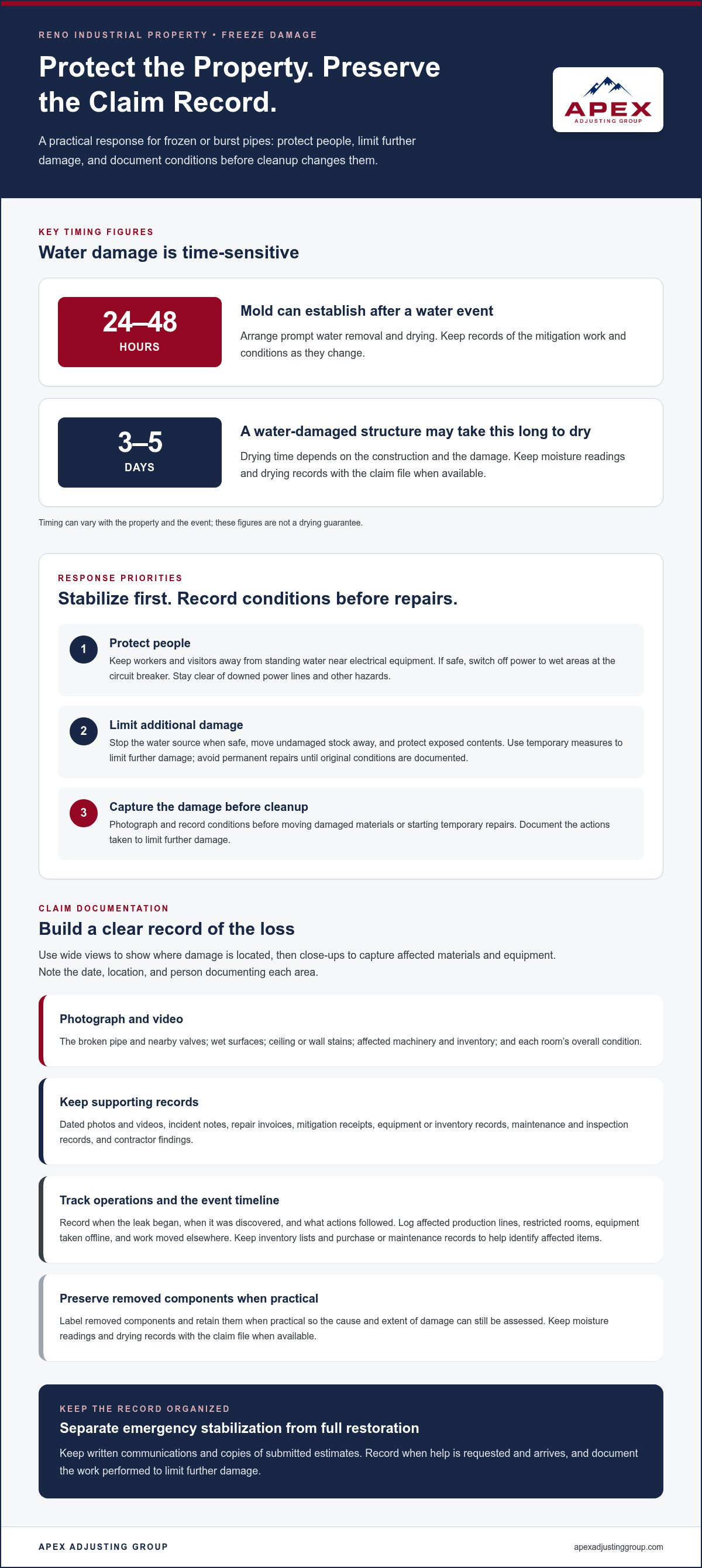
Keep workers and visitors away from standing water near electrical equipment. If it is safe, switch off power to wet areas at the circuit breaker. Stay clear of downed power lines and other hazards. Do not use a household vacuum to remove water, as it may be unsafe and could damage the vacuum.
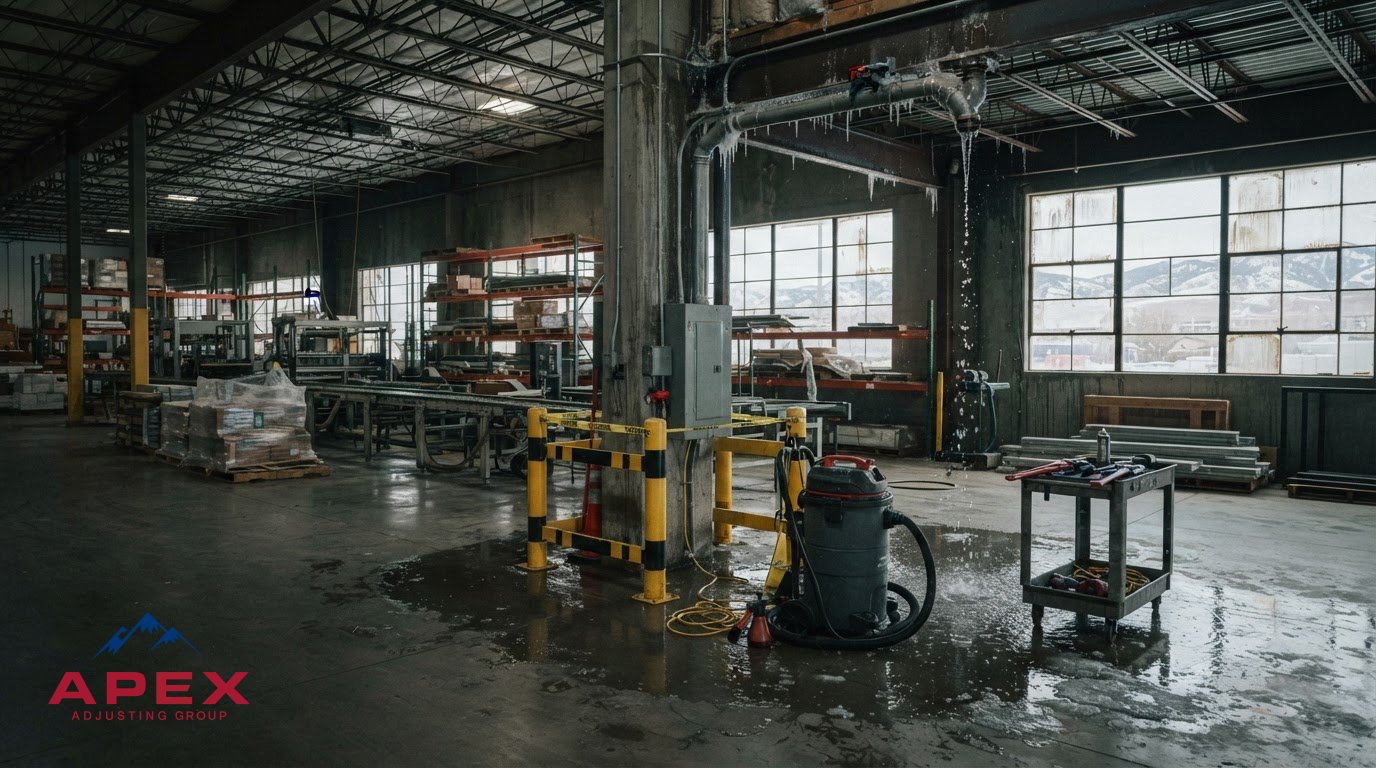
For emergency stabilization, stop the water source when safe, move undamaged stock away, and protect exposed contents from further water. Use temporary measures to limit additional damage, but avoid permanent repairs until the original conditions are documented. A 24/7 emergency disaster-recovery response may be relevant when a leak occurs overnight or disrupts an active production area. Emergency response availability varies, so use the facility’s after-hours contact process and record when help is requested and arrives.
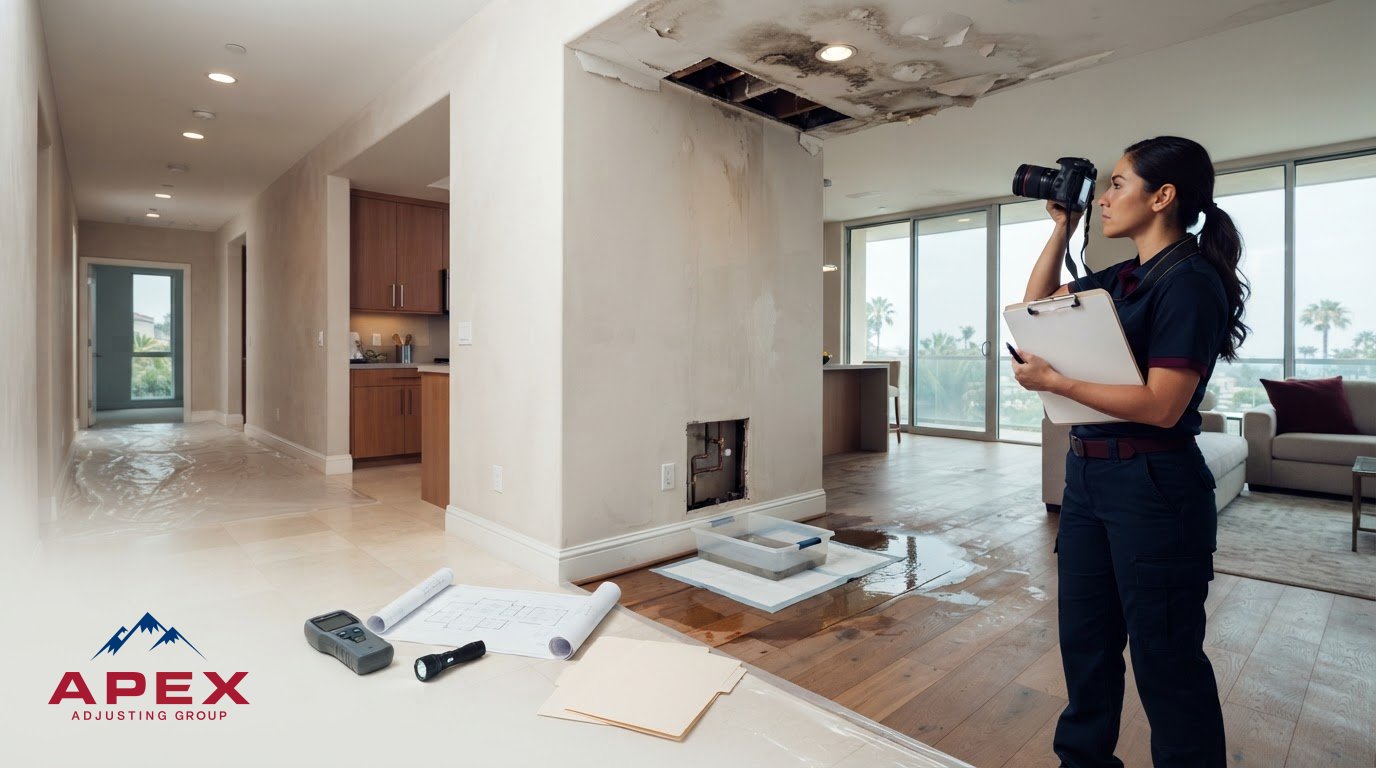
Take thorough photos and videos before moving damaged materials. Capture the broken pipe, nearby valves, wet surfaces, ceiling or wall stains, affected machinery and inventory, and each room’s overall condition. Include close-ups and wider views that show where the damage is located. Record the date, location, and person documenting each area.
For an industrial property freeze-damage claim, gather dated photos and videos, incident notes, repair invoices, mitigation receipts, and records of damaged equipment or inventory. Add maintenance and inspection records, contractor findings, and a timeline showing when the leak began, when it was discovered, and what actions followed.
Keep a separate log of business disruption. Note affected production lines, restricted rooms, equipment taken offline, and work moved elsewhere. Keep inventory lists and purchase or maintenance records to help identify affected items. Label removed components and retain them when practical, so the cause and extent of damage can still be assessed.
Water can support mold growth within 24 to 48 hours after a water event. Arrange prompt water removal and drying, and document the work performed. A water-damaged structure may take 3-5 days to dry, depending on its construction and damage. Keep moisture readings and drying records with the claim file when available.
Separate urgent stabilization from full restoration. Policy requirements for notice, documentation, and repairs can affect the claim, so keep written communications and copies of submitted estimates. If roof snow threatens structural integrity, keep people away from the affected area and document visible damage from a safe location. Do not enter an unstable building or unnecessarily disturb damaged systems.
Claim delays, underpayments, and denials
A delayed or reduced payment can leave a Reno facility facing repair costs and operational pressures at the same time. Start with the insurer’s latest written position, then compare it with the reported damage, submitted estimates, and policy language. Keep every request, response, inspection note, and revised estimate in one dated claim file.
For a commercial freeze claim, a licensed public adjuster can document property damage and help present the first-party insurance claim. An attorney provides legal representation, a separate role from public adjusting. This distinction matters when the dispute concerns the scope of damage and claim documentation, rather than legal representation.
Ask the insurer to identify the specific items it accepted, reduced, or excluded. For example, if an estimate includes pipe replacement but omits water-damaged wall finishes, request a written explanation of the difference. Compare room measurements, material quantities, equipment findings, and repair descriptions line by line.
When a claim stalls, follow up on specific open items instead of sending repeated general requests. A concise status request can identify the last inspection date, documents still under review, and the next decision needed. Save proof of delivery and note each response date. This creates a clear record of the review’s progress.
If the insurer denies coverage or disputes the cause, read the cited policy provision alongside the facts. A maintenance exclusion, vacancy condition, or limitation may depend on precise wording and documented circumstances. Preserve inspection records, heating-system service notes, utility records, and written findings explaining how freezing affected the building.
For complaints submitted to the Nevada Division of Insurance, insurers generally must respond to it within 20 business days, according to the Nevada Division of Insurance. That response period concerns the complaint process; it is not a promise that the property claim itself will be settled in that time.
- Match each disputed repair item to photographs, measurements, estimates, or technical findings.
- Separate the insurer’s coverage position from its valuation of covered damage.
- Record dates for inspections, document submissions, follow-ups, and written decisions.
A Reno business can use public adjusting when it needs help documenting damage and presenting claim scope. A public adjuster does not provide legal representation. For a review of an active or recently disputed property claim, request a free claim review.
Frozen pipes and plumbing damage
In a Nevada industrial building, freezing temperatures can freeze plumbing and cause pipes to burst. Water may spread from a mechanical room into offices, production areas, or stored inventory. The resulting water damage can interrupt operations and affect building finishes, electrical systems, machinery, and stock. Trace the water path beyond the visible break, since damage may extend into connected spaces.
Start the plumbing investigation at the failure point. Record the pipe’s location, nearby heating conditions, insulation, valves, and any signs of earlier leakage or corrosion. A plumber’s written findings can help distinguish a sudden freeze-related break from a pre-existing condition. Retain removed pipe sections when practical, and label their location before they leave the property.
Group damaged building components into clear categories. For example, a burst pipe above a production floor may affect ceiling materials, lighting, machinery surfaces, and stored packaging. Record each area and item separately. For equipment, note its location, visible condition, operating status, and inspection findings. For inventory, identify the product type, quantity affected, and disposition.
A Reno NV industrial property freeze damage claim should connect the reported cause to the damage and repair scope. Review policy wording on freezing, water damage, and related losses, including provisions tied to building conditions. Document how the space was heated or maintained, along with damage to each system. Keep the plumber’s report, photographs, work orders, and restoration records together.
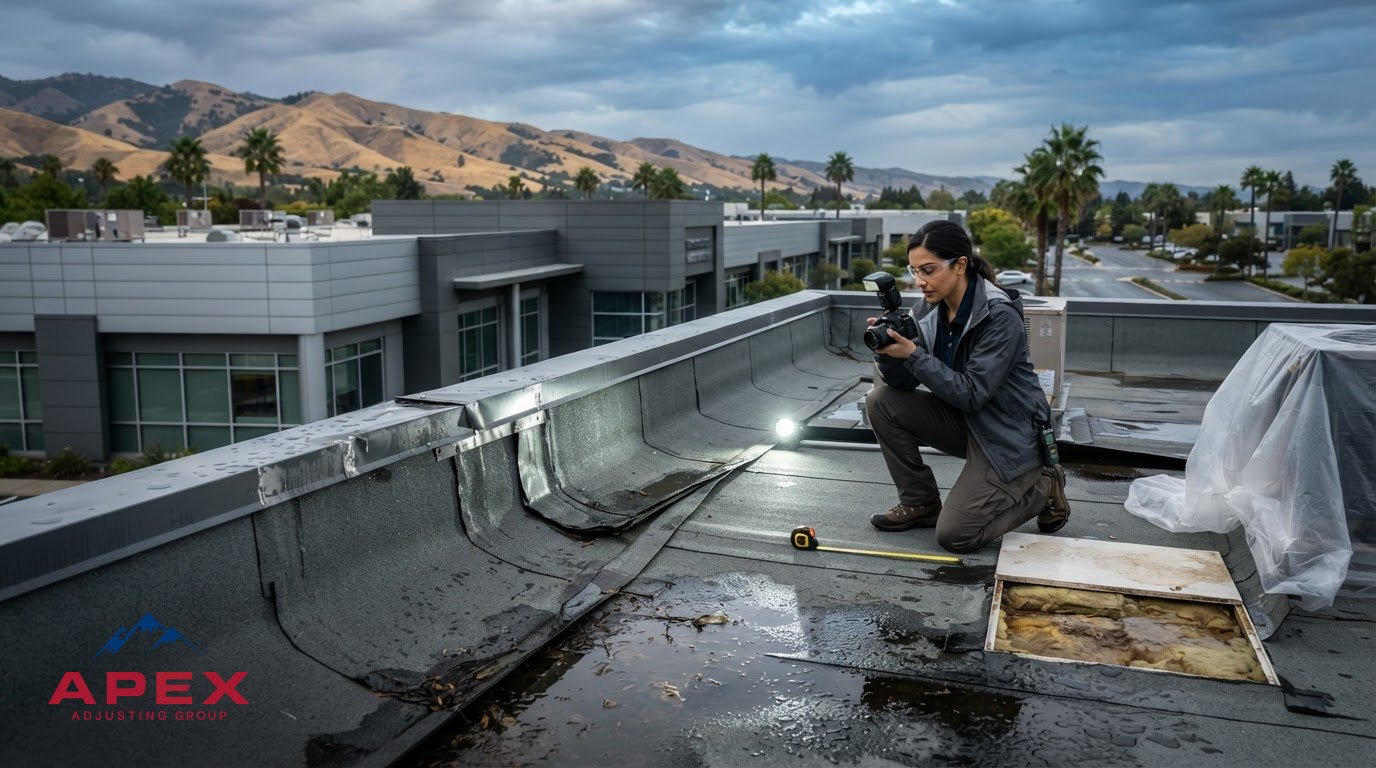
Distinguish freeze damage from storm damage when causes overlap. A winter storm may coincide with a pipe failure, roof leak, or ice-related damage, but each source can affect the claim assessment differently. Document each damage path separately. For example, photograph staining below the pipe break separately from water intrusion through the roof or an exterior wall.
Pre-loss records can clarify the building’s condition before the damage occurred. Keep inspection notes for plumbing, heating, roofs, and the building envelope. Insulate and weatherize walls, roofs, and areas around pipes to reduce exposure to cold. Record completed work and known heating or plumbing concerns so the timeline does not rely on memory alone.
- Map the pipe failure and the full path of water through the property.
- Preserve plumbing findings, damaged components, and equipment inspection records.
- Organize repair documentation by affected building area, machinery, and inventory.
Plan restoration around both physical repairs and operational needs. Identify which production areas can function safely, which equipment needs inspection, and which materials must be removed. Update repair scopes as additional damage becomes visible. A well-documented Reno NV industrial property freeze damage claim file can connect the pipe failure to the facility’s recovery needs and support review of affected property.
Claim timelines and settlement process
A freeze-loss claim typically moves through notice, inspection, damage evaluation, estimate review, and payment decisions. Its pace depends on access to the building, the scope of affected systems, and how quickly supporting records reach the insurer. Track each submission and response in a dated claim log.
Start with the policy’s claim-notice instructions and report the loss through the required channel. Include the discovery date, suspected source, affected areas, and steps taken to limit further damage. Keep the confirmation and claim number with the file. If the insurer requests records, note what was requested and when you provided it.
During inspection, identify the full scope of damage, not just the visibly split pipe. For example, a leak above a production line may affect ceiling materials, wiring, machinery, inventory, and nearby rooms. Provide access to relevant areas and organize photographs, plumbing findings, drying records, and repair estimates by building location.
Freeze damage is evaluated by assessing covered building repairs, equipment damage, affected inventory, and any eligible business interruption under the policy. The applicable valuation terms, documented condition, repair scope, item records, and operational impact all shape the evaluation.
After inspection, compare the insurer’s estimate with the documented repair scope. Check quantities, materials, labor descriptions, equipment findings, and omitted areas. If new damage appears during drying or removal, document it and submit related findings and revised estimates. A clear explanation should link each requested item to evidence of the loss.
- Report the loss and retain the claim confirmation.
- Prepare inspection access and organize records by affected area.
- Compare the estimate against repairs, equipment, inventory, and operational impacts.
- Submit additional documentation for newly identified damage or disputed scope.
Payment decisions may involve separate reviews of coverage, damage scope, and valuation. Read the written explanation and note whether it addresses each disputed item. If the insurer needs more information, respond with the specific record or estimate requested. Keep copies of everything you send.
When a major loss affects several systems, coordination can add review steps. The insurer may assess building repairs separately from machinery or stock, while contractor findings may arrive at different stages. Maintain one timeline of inspections, requests, estimates, and decisions so unresolved items remain visible.
Settlement timing depends on the claim’s open questions, the completeness of its documentation, and the extent of repairs requiring evaluation. A dated timeline helps property owners see what has been reviewed, what remains outstanding, and what response is needed next.
What policy exclusions apply to freeze damage claims, including vacancy and maintenance requirements?
A freeze claim can turn on policy wording about frozen plumbing, vacancy, heat, maintenance, and resulting water damage. Do not assume one exclusion determines the entire loss. Read the declarations, coverage form, endorsements, and cited exclusion together. Note the exact provision the insurer relies on and which damaged property or repair item it addresses.
Vacancy terms may matter when an industrial space is unoccupied, partly used, or temporarily shut down. Review the policy’s definition of vacancy and any conditions tied to heating or water systems. Then gather records showing how the property was used before the freeze, including access logs, production schedules, utility records, and inspection notes. A closed production line alone does not describe the condition of every area.
Maintenance language may raise questions about whether a pipe burst because of freezing or a longstanding defect. Build a factual timeline from plumbing work orders, heating service records, roof inspections, and prior leak reports. For example, a heating-system inspection documented before the event and a plumber’s findings afterward can help distinguish a freeze event from corrosion or an older leak.
Check for policy conditions addressing heat, water shutoffs, or precautions during vacancy. The exact wording matters: identify the required action, any stated exception, and the locations covered. Compare those terms with building records. If a remote warehouse had separate heat controls, document its settings, access, and maintenance separately from the occupied production wing.
- Save the complete policy, declarations, and endorsements in the claim file.
- Mark the specific exclusion or condition cited in a written coverage position.
- Match each affected area with occupancy, utility, inspection, and maintenance records.
- Keep plumbing and heating findings that address the failure’s cause and condition.
Separate the cause question from the damage-scope question. A dispute about a maintenance condition does not automatically explain whether every affected building component, machine, or inventory item was evaluated. Compare the insurer’s written position with the policy wording and submitted evidence. List unresolved items individually, such as pipe replacement, wet insulation, or equipment inspection, and attach supporting records.
Keep communications focused and traceable. Ask which policy provision supports a coverage decision and identify the facts it addresses. Submit relevant records with a brief explanation linking each document to the property condition or event. Retain original maintenance logs and dated inspection reports instead of relying only on summaries prepared after the loss.
Apex Adjusting Group: Fire Damage Claims
Apex Adjusting Group represents property owners in first-party property damage claims, including commercial property and water damage claims. For an industrial freeze loss, its public adjusting services can organize damage documentation, review the insurer’s scope, and present the claim details. This can help when an estimate omits affected building areas, equipment, or inventory, or when a claim is delayed or disputed.
Apex Adjusting Group does not perform construction or repair work. Property owners arrange repairs and emergency mitigation while keeping claim records organized. The firm provides claim representation, not legal representation.
For help reviewing an active or recent claim, contact Apex Adjusting Group or visit apexadjustinggroup.com.
Set a clear direction for the next claim decision
A freeze loss can leave business leaders balancing claim decisions with facility plans. Treat the next review as a decision point: identify what remains unresolved, which operational choices depend on it, and who is responsible for moving it forward. This keeps a Reno, NV, industrial property freeze-damage claim aligned with recovery priorities instead of letting open questions drift from business planning.
Before making major claim decisions, bring together the people responsible for property operations, finance, and insurance communication. A shared understanding of the claim’s current position helps the business assess its options and decide what needs attention next. For an independent claim review, Apex Adjusting Group can assess the file and explain its public adjusting role.
Take the next step with a clearer understanding of the claim and the decisions ahead.
Frequently Asked Questions
What freeze damage risks are common for industrial properties in Reno, Nevada?
Frozen or burst plumbing can damage building finishes, machinery, inventory, and areas below the pipe. Risk areas include pipes near exterior walls, loading bays, roof spaces, and rooms with limited heat. Extreme cold can also strain commercial heating systems, leaving work areas inadequately heated. Heavy roof snow creates a separate structural concern. Map vulnerable zones and note which operations, materials, or equipment depend on each area.
Does commercial property insurance cover frozen pipes and freeze damage in Nevada?
Coverage depends on the commercial policy and the facts of the loss. Review provisions addressing frozen plumbing, resulting water damage, vacancy, heat, and maintenance. For example, a policy may treat damage to a burst pipe differently from water damage to nearby equipment or stock. Compare the insurer’s written coverage position with the policy language and each affected item before assuming the whole loss is covered or excluded.
What are the deadlines for reporting and filing a commercial property insurance claim in Nevada?
Follow the notice and filing deadlines stated in the policy, and report the freeze loss promptly through the required process. Check the specific reporting terms and preserve the date of discovery, claim submission, and insurer communications. Missing a policy deadline can affect how the claim proceeds.
What steps should Reno industrial property owners take immediately after freeze damage?
First, protect employees from unsafe areas and isolate affected operations, such as a production line beneath a leaking ceiling. Then identify affected rooms, equipment groups, and inventory lots. Keep undamaged stock separate from wet or contaminated items, and track any movement. Record which areas remain usable and which need restricted access. This operational map connects property damage with the facility’s recovery needs.
How can an insurer deny or underpay a freeze damage claim, and how can the owner dispute it?
A denial or reduced estimate may cite a policy exclusion, a vacancy or maintenance condition, disputed causation, or omitted repairs. Respond by matching each disputed point with relevant evidence, such as a service record, plumber’s finding, equipment inspection, or repair estimate. Request a written explanation of specific differences. A claim representative can assess documentation and present the property damage scope; legal representation is a separate role.
Need Help with Your Insurance Claim?
Our licensed public adjusters can help you get the maximum settlement you deserve. Contact us today for a free claim evaluation.
Related Articles