A clean-looking room doesn’t prove a home is free of smoke damage. To prove hidden smoke damage in a Southern California home, document residue and odors, use environmental testing to identify contamination, and preserve HVAC inspection findings. Testing can help show what settled inside vents or behind walls, even when damage isn’t visible.
A home untouched by flames can still have smoke particles on surfaces or inside its ventilation system. Photographs alone may not tell the full story. This guide explains how to prove hidden smoke damage in a Southern California home, how testing can strengthen claim documentation, and which records can help show the extent of contamination.
Learn how smoke, soot, and ash differ, what environmental testing can reveal, and how to document affected areas and belongings before cleanup changes the evidence. The goal is a clear record of what happened, where smoke reached, and what the property may need.
Key Takeaways
- A home can have smoke damage even when flames never reached it and residue isn’t obvious.
- Environmental testing and HVAC inspection records can help document contamination that a visual inspection may miss.
- Record residue, odors, and affected areas before cleanup changes the evidence, then preserve photos and reports with the claim file.
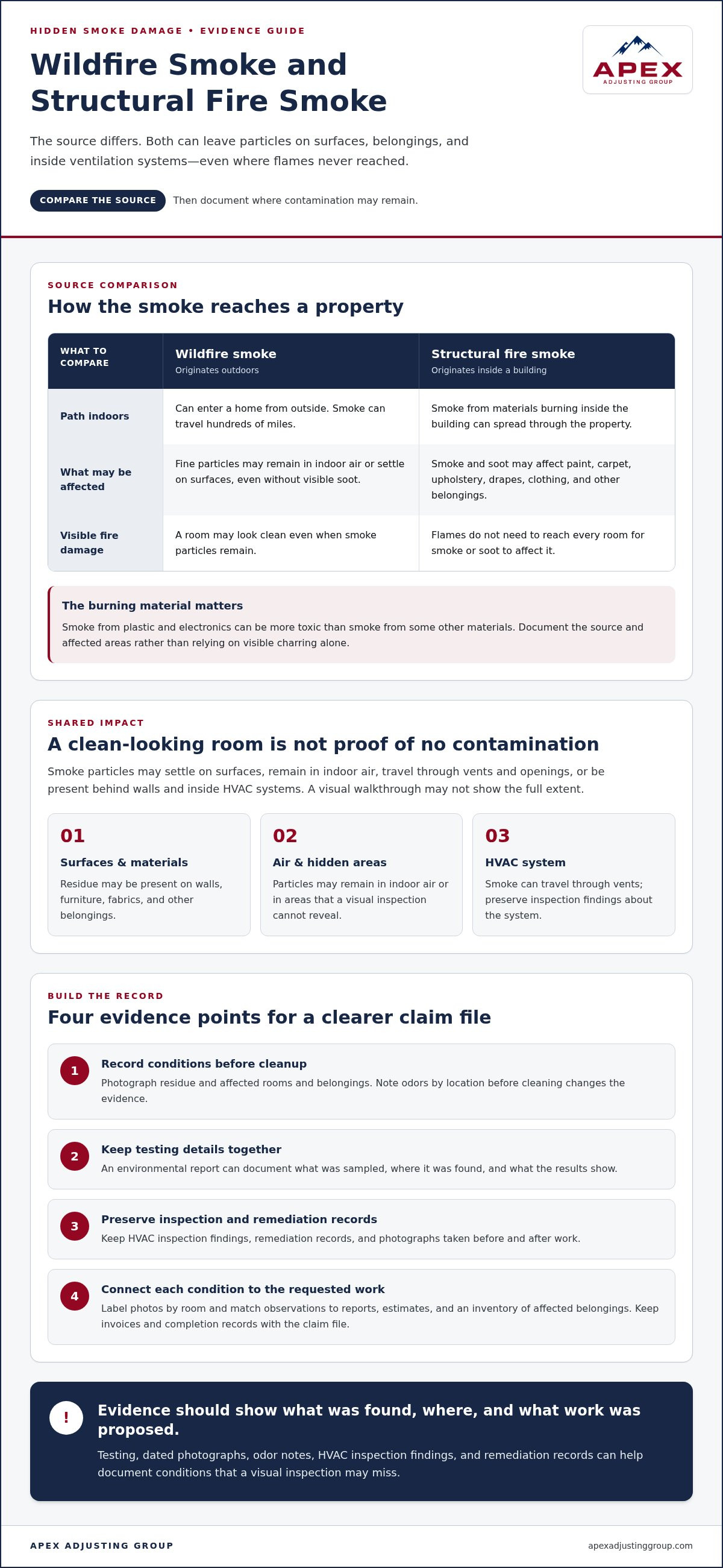
- Smoke can travel through vents and openings, leaving contamination behind walls, in fabrics, and inside HVAC systems.
- Detailed assessments and personal property inventories can help show the extent of damage and the work needed.
What Constitutes Smoke Damage?
Smoke damage can affect a home even when flames never reach its interior. Contamination may alter surfaces, materials, and indoor air, impairing how rooms or equipment function. In Bottega, LLC v. National Surety Corp., case 21-CV-03614, the court treated smoke contamination as direct physical damage. The case illustrates why a claim should address contamination, not just visible burn marks.
Testing can identify residue and contaminants a visual walkthrough may miss. A third-party environmental report can document what was sampled, where it was found, and what the results show. Preserve the report with dated photographs, odor notes, and an inventory of affected rooms and belongings. These independent findings can help connect the reported conditions to the requested remediation.
Before cleanup, document visible residue and odors, then keep copies of testing and inspection reports. An insurer may assess the evidence and compare the documented damage with the proposed cleaning or replacement scope. Remediation records, photographs taken before and after work, and itemized estimates help show what changed. California Department of Insurance Bulletin 2025-7 states insurers cannot require permanent physical changes to validate smoke damage claims.
A smoke damage claim may be reduced or denied if the file does not clearly connect observed conditions, test results, and requested work. Compare the insurer’s estimate with the testing report and remediation scope, then identify any omitted rooms, surfaces, or personal property. Request the decision and its basis in writing. Keep correspondence, estimates, photographs, and receipts together so the claim record accounts for each disputed item.
The insurer’s adjuster evaluates the claim for the insurance company. A public adjuster represents the property owner and can review damage documentation, estimates, and claim scope. The roles differ, even when both inspect the same rooms. For example, if a testing report shows residue in a room omitted from an estimate, the owner has specific evidence to raise during claim review.
Careful investigation, testing, and restoration can help clarify the extent of smoke damage in a home. California Governor Newsom signed AB 1795 on September 15, 2026. Training may help prepare adjusters and public adjusters to handle smoke damage claims. These developments make careful documentation of testing and remediation especially important.
Build a clear file for each affected area. Label photographs by room, note whether residue appears on walls, furniture, or HVAC components, and match each observation to a report or estimate. Preserve invoices and completion records after remediation. A complete record shows what was found, what work was proposed, and whether the insurer’s assessment accounts for the documented conditions.
1️⃣ What is Wildfire Smoke, Soot, Char, and Ash?
Wildfire smoke can enter a home from outdoors, while smoke from a structural fire originates inside the building. Either can leave fine particles on surfaces, belongings, and inside ventilation systems, even if flames never reach a room.
Lingering Smoke Contamination
Lingering smoke contamination consists of residue and particles left indoors after wildfire smoke has cleared outside. Smoke can travel hundreds of miles, and its particles may remain in indoor air or settle on surfaces without visible soot. A clean-looking room alone doesn’t document the condition. Photographs, odor notes, and testing records can help show where contamination remains.
Wildfire and Structural Fire Smoke
Wildfire smoke enters from outside, while structural fire smoke comes from materials burning inside a building. Both can leave smoke and soot on paint, carpet, upholstery, drapes, clothing, and other belongings. The burning materials matter too: smoke from plastic and electronics can be more toxic than smoke from some other materials. Document the source and affected areas instead of relying on visible charring alone.
California AB 1795, the Smoke Damage Recovery Act, creates a presumption about wildfire contamination. Smoke, ash, soot, char, or combustion byproducts found in a surviving residential property within a wildfire impact zone are presumed to have been caused by that wildfire. California Governor Newsom signed AB 1795 on September 15, 2026. Owners should identify the property’s wildfire impact zone and preserve evidence of residue, odor, and affected materials for insurance claims.
After a wildfire, document conditions as soon as smoke clears and the property is safe to access. Photograph residue before cleaning, capture affected rooms and belongings, and note odors by location. If remediation has already started, preserve records showing conditions before and after the work. Keep fire incident information with dated images and testing documents so the claim file links the event to observed conditions.
Health concerns also belong in the record. Medical records documenting health impacts from smoke exposure can support damage claims, while testing can identify contaminants in the property. Residential health standards do not exist for most contaminants found in fire-impacted homes. CalEPA is required to develop health-based standards for smoke-damaged residential properties by June 30, 2027. Avoid treating a visual inspection as proof of what contaminants are present.
Separate evidence by room and material: a soot-marked curtain, residue on a window frame, or smoke odor near a vent. Preserve laboratory results, remediation records, and personal property inventories with the claim documents. If the insurer’s assessment overlooks documented smoke-related conditions, a free claim review can help examine the file.
Why test for smoke damage if my home didn't burn?
A home may show no fire damage yet still contain smoke residue that a visual inspection cannot identify. Testing can document contamination and help define the affected areas.
Inspection Limits and Contamination Evidence
A standard home inspection can identify visible conditions, but it doesn’t measure specific smoke-contamination levels through laboratory testing. That distinction matters when smoke has settled on surfaces or in areas that aren’t readily visible. Environmental testing can document what was sampled and where, giving homeowners evidence beyond odor reports or photographs.
Before cleaning, record the room, surface, and condition at each suspected location. Pair dated photographs with the testing report to connect its findings to specific areas. If remediation has begun, preserve records of conditions before and after the work. This sequence helps show what changed and which areas the work addressed.
Professional Environmental and Air Testing
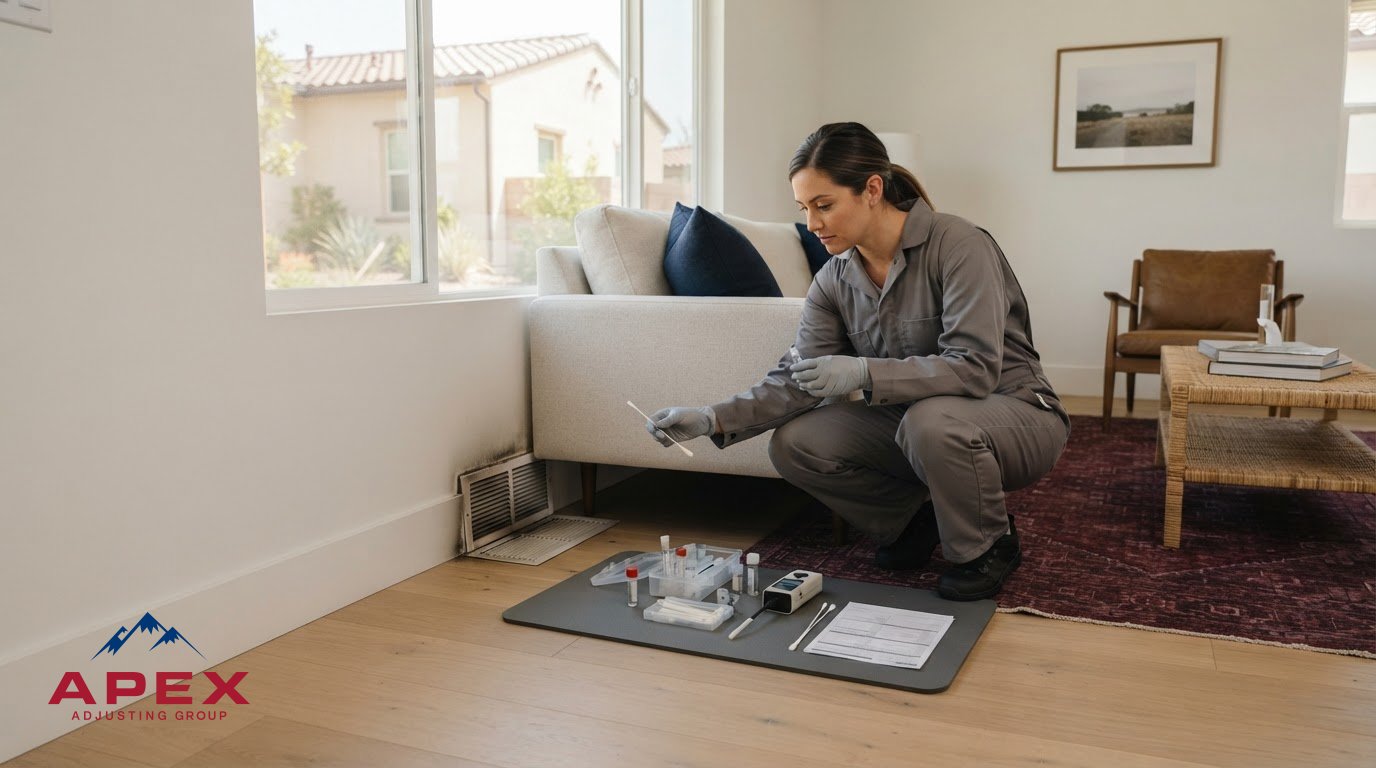
Professional environmental testing uses sampling and laboratory analysis to identify contamination a visual walkthrough cannot measure. A home inspection alone doesn’t provide those laboratory results. A qualified industrial hygienist or environmental consultant can assess the property and report findings for the claim file.
Independent industrial hygienists focus on sampling and documenting environmental conditions, while restoration companies focus on cleanup and remediation. Separating testing from the party paid to perform cleanup can help keep findings more objective. Professional air quality test results can serve as smoke-damage evidence, especially when the report identifies sampled locations and explains the results.
Inspection Costs and Laboratory Testing
The cost of a smoke damage inspection and laboratory testing in Southern California depends on the case and is provided after a quote request. Relevant cost factors include the number and type of samples, laboratory analyses, property access, and the scope of reporting. A written quote should describe the proposed testing scope before sampling begins.
For an insurance claim, match each proposed sample to a concern, such as a room with persistent odor or a surface with residue. This helps the report explain why testing was done and what each result addresses. Keep the quote, final report, and related remediation estimate together.
Inspector Credentials and Test Targets
Smoke testing should be handled by a qualified industrial hygienist or environmental consultant. Ask the professional to identify their qualifications, sampling methods, and laboratory procedures in the report. Because there is no single universal certification for every smoke-damage inspector, the report’s author, methods, and scope matter.
Testing can assess smoke contamination in the air or on affected materials, while the inspection records where samples came from. For example, a report can distinguish an air sample from a surface sample and identify the room or material tested. This detail helps homeowners connect the findings to the property’s condition and the remediation under consideration.
FAQs for burned, nearby, and indirectly affected properties
Smoke can reach homes beyond a fire’s footprint, so an inspection should document affected rooms, contents, and building systems. These answers explain which records can help show damage and support a restoration scope.
Can a nearby home have smoke damage without visible soot?
Yes. Smoke can enter through hallways, vents, and small openings, then affect rooms far from the fire’s source. A clean-looking surface doesn’t rule out residue elsewhere. Record odors by room, photograph visible deposits, and include HVAC inspection findings when available. A thorough assessment should document how far smoke and fire damage spread, not focus only on the nearest exterior wall.
Photograph each affected area in high resolution, using both wide views and close-ups. A wide image shows the room and location; a close-up captures a mark, residue, or affected material. Take video as you move through the space, narrating the room name and visible condition. Keep original files with dates and organize them by room before cleanup or restoration changes the evidence.
What documents can support an inspection and coverage review?
Keep the inspection report, environmental test results, HVAC findings, and detailed remediation estimate together. Add dated photographs and videos, plus a personal property inventory identifying affected belongings and estimated replacement costs. These records connect a condition to a location and proposed work. Coverage depends on the policy’s terms and the evidence in the claim file, so retain insurer estimates and written claim decisions with the supporting documents.
If smoke odor appears in a bedroom but the estimate addresses only the living room, for example, label the bedroom evidence clearly. A room-by-room comparison makes differences between inspection findings and the proposed scope easier to spot. Preserve receipts for temporary housing and additional living expenses if the household has to relocate.
What affects the restoration estimate?
Restoration scope depends on the documented spread and affected materials. An estimate may distinguish surface cleaning from work involving upholstery, clothing, or HVAC components. It should identify each location, the proposed task, and any material proposed for replacement. Compare these details with inspection findings and test results; a broad total without room-level detail can obscure omitted work.
Ask that the estimate explain how each task relates to observed conditions. For example, an HVAC inspection report can support including system-related work, while photographs can pinpoint residue on a surface. Keep revised estimates and remediation records so the file shows what was proposed and what work was completed.
Should the inspection be independent?
An independent assessment can document conditions separately from the party performing cleanup. This separation helps distinguish findings from remediation recommendations. Compare the assessment’s room locations and observations with the restoration estimate, then flag any mismatch during claim review. A clear record gives homeowners a practical way to discuss affected areas and the requested scope.
Hidden smoke damage behind walls and in HVAC systems
Smoke can leave contamination where a room looks clean, including inside building cavities and air systems. In Los Angeles-area homes, documenting these concealed locations helps connect suspected damage with inspection findings.
Concealed Damage Locations
Hidden smoke damage is residue that settles out of sight behind walls, inside HVAC systems, or on concealed building components. Smoke particles can cling to porous drywall, insulation, and fabrics, while residue may settle on beams, wiring, and stored belongings. These locations matter because an assessment limited to visible surfaces can miss affected materials and fail to capture the property’s full condition.
Map suspected areas by room and building system. Note whether an odor is strongest near a return vent, wall opening, or stored items. An HVAC inspection report can document system conditions, while an environmental report can identify sampled locations. Together, these records show where evidence was found, rather than relying on a general statement that the home smells smoky.
Signs of Hidden Smoke Damage
Common signs include persistent smoke odor, residue near vents, and odors that return when air circulates or temperatures rise. Smoke may also affect rooms far from the burned area as particles move through openings and ventilation pathways. These signs can indicate where closer assessment is needed, but odor alone does not identify the material or extent of contamination.
Record the pattern, not just the symptom. Photograph residue around supply registers, note which rooms develop an odor when the HVAC runs, and capture affected fabrics or stored belongings. Keep original photographs and videos with room names and dates. This creates a useful comparison for an inspection and helps the insurance company assess the locations included in the claim.
Hidden conditions require evidence tied to specific locations. A qualified inspection can assess how far smoke and fire damage spread, including areas that were not directly burned. Compare its findings with proposed remediation tasks. If an estimate covers visible wall cleaning but omits reported residue inside an HVAC system, the inspection report can pinpoint the difference for review.
Preserve evidence before disturbing concealed materials. Don’t remove drywall or insulation just to expose suspected smoke residue. Instead, photograph accessible openings and vents, record odor locations, and retain HVAC inspection reports and testing results. If remediation has begun, keep records showing conditions before and after the work. A clear room-by-room record makes hidden findings easier to match with the proposed restoration scope.
In a home with recurring odor, track when it appears, such as after the HVAC starts or when a room warms. Pair those notes with vent photographs and system inspection findings. An independent assessment can identify whether reported conditions align with sampled or inspected locations, and a free claim review can help evaluate how that evidence fits the claim file.
Apex Adjusting Group: Fire Damage Claims
Apex Adjusting Group represents property owners in first-party fire damage claims, including claims involving smoke contamination. When testing reports, HVAC findings, photographs, or remediation estimates are missing from the insurer’s assessment, its public adjusting services can help review the documented damage and claim scope. This includes comparing affected rooms and materials with the proposed cleaning or replacement work.
Turn to Apex Adjusting Group when a fire or smoke claim is delayed, denied, or appears underpaid. The firm works on a contingency basis, with a fee only when it obtains a settlement. A claim review can help clarify what the file documents and where the scope may need closer attention.
Request a free claim review with Apex Adjusting Group.
Move From Smoke Evidence to a Clear Claim File
Knowing how to prove hidden smoke damage in a Southern California home is useful only when the evidence is organized into a claim record. Align each observed condition with its location, supporting documentation, and the work included in the insurance estimate. This makes unresolved gaps easier to identify and discuss.
Apex Adjusting Group reviews fire damage, water damage, and commercial property claims for property owners. As a public adjusting firm representing owners, it can examine claim documentation and the scope presented for property damage. A review can clarify which questions to raise about the claim file.
Bring the claim estimate and relevant records together before the next discussion about scope. Apex Adjusting Group offers a free claim review to assess how those materials fit the file.
A practical next step can make a complex claim easier to approach.
Frequently Asked Questions
Quick answer: Can wildfire smoke contaminate a house that didn’t burn?
Yes. Wind can carry wildfire smoke into a home without flames reaching the building, and particles may enter through openings or ventilation. In California, AB 1795 presumes smoke, ash, soot, char, or combustion byproducts found in a surviving residential property within a wildfire impact zone were caused by that wildfire. Keep evidence tied to the property and event, including the inspection findings and the affected locations.
Should I test before or after cleaning?
Arrange testing before cleaning whenever it’s safe to access the property. Cleaning can remove or disturb residue, making the original conditions harder to document. If urgent work has already started, retain earlier photographs, invoices, and remediation notes, then document the remaining conditions. A clear timeline showing when testing and cleanup occurred helps explain which evidence reflects the home before work and which records its condition afterward.
How can smoke residue and soot be tested on walls, HVAC systems, and belongings?
Use an environmental professional to assess suspected areas and determine appropriate sampling. A report should identify the tested location and material, such as a wall surface, HVAC component, or affected belonging, and present the results. Air quality testing can add evidence about airborne contamination, while an HVAC inspection can document system conditions. Keep item labels, room locations, and report pages together so findings can be matched to the claim estimate.
What photos, samples, and records help document hidden smoke damage for an insurance claim?
Photograph each affected room from the doorway, then take close-ups of residue, discoloration, or damaged contents. Record odors by room and note when they occur, such as after the HVAC starts. Preserve environmental test reports, HVAC inspection findings, remediation estimates, invoices, and insurer correspondence. For belongings, create an inventory with descriptions and estimated replacement costs. Keep original photo files and label supporting records by room or item.
How can homeowners challenge an insurer’s denial or low estimate for smoke damage in California?
Compare the written decision and estimate with the documented conditions, then identify specific gaps. For example, note an affected room, HVAC finding, or personal property item omitted from the estimate, and submit the related report or photograph through the claim’s established communication process. Ask for the insurer’s explanation in writing and retain copies of each submission. A California public adjuster can review the claim scope and documentation but does not provide legal representation.
Need Help with Your Insurance Claim?
Our licensed public adjusters can help you get the maximum settlement you deserve. Contact us today for a free claim evaluation.
Related Articles