Smoke damage isn't a cleaning problem. It's a chemical invasion of your property that requires a tactical recovery strategy. When an adjuster tells you that lingering, acrid smell is 'fine,' they aren't just ignoring your discomfort; they're ignoring the toxic soot and invisible residues that compromise your health. Filing a smoke damage insurance claim shouldn't feel like a second disaster. Yet, most policyholders find themselves buried under complex policies while their insurer offers pennies for what requires professional decontamination.
We understand the frustration of being told your home is safe when your own senses tell you otherwise. You deserve a recovery that prioritizes your safety over an insurer's profit margin. This checklist will teach you how to identify hidden damage, document every loss with precision, and force your insurance company to pay the full settlement you deserve. We'll walk through the essential evidence you need and the industry standards like ANSI/IICRC S700 that your adjuster might be 'forgetting' to mention. Stop settling for a lowball offer and start taking control of your recovery today.
Key Takeaways
- Identify smoke as a chemical intrusion that infiltrates wall cavities and HVAC systems rather than just a lingering odor.
- Recognize common insurer tactics like the "cleaning vs. replacement" trap designed to minimize your payout.
- Execute a rigorous documentation strategy for your smoke damage insurance claim by capturing soot patterns in hidden areas like drawers and attics.
- Challenge lowball offers by demanding line-itemized estimates and comparing them against independent structural evaluations.
- Leverage professional representation to shift the burden of proof from your shoulders to an expert advocate.
The Invisible Threat: Why Smoke Damage is More Than a Smell
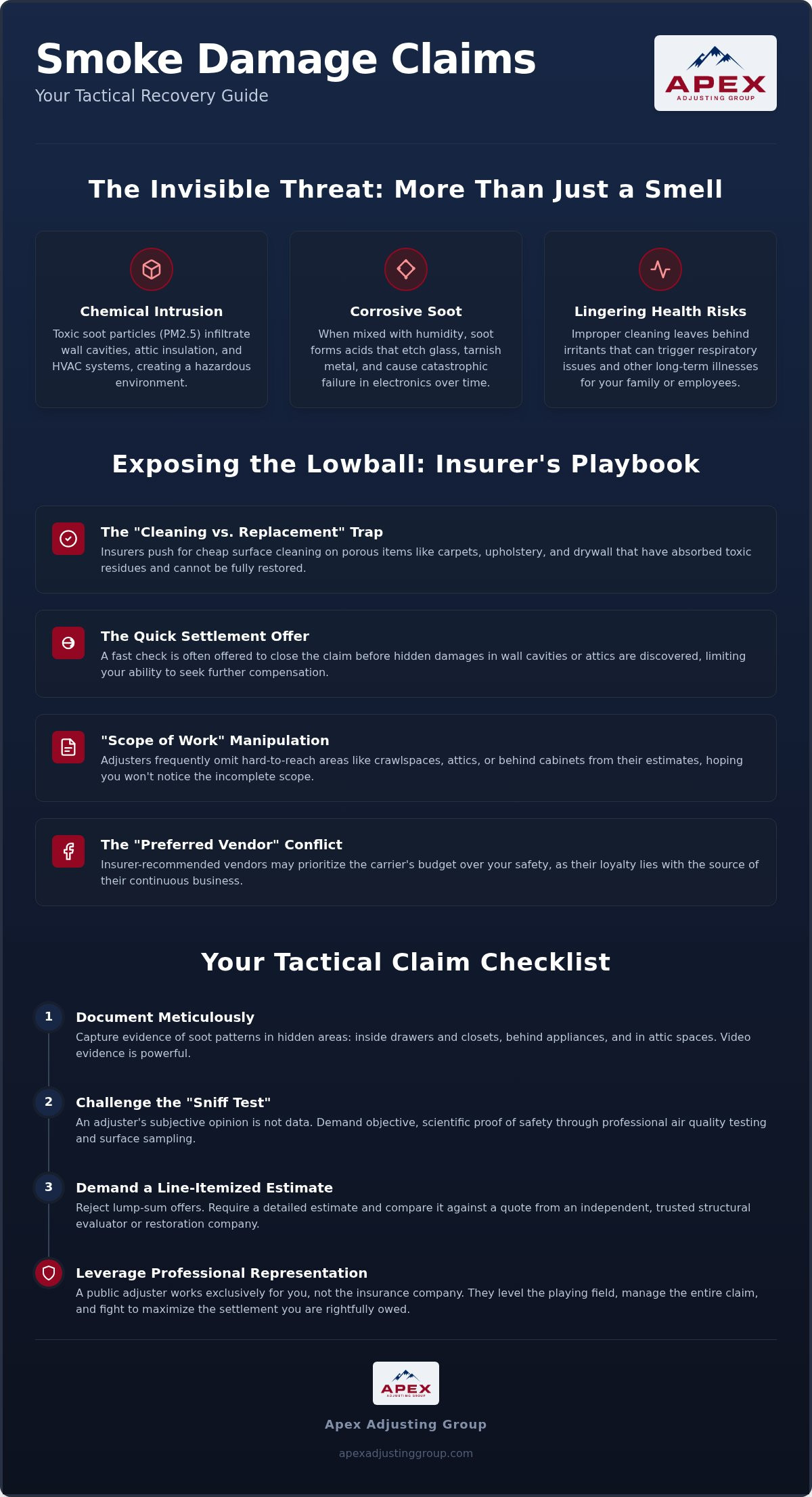
Smoke isn't just a lingering odor or a gray stain on the ceiling. It's a chemical intrusion. When a fire occurs, it releases a cocktail of acidic soot and toxic residues that don't just sit on surfaces. They migrate. Smoke particles are incredibly small, often measured as particulate matter (PM2.5), allowing them to drift through wall cavities, settle deep into attic insulation, and coat the interior of HVAC ductwork. This invisible contamination turns your property into a reservoir for toxins long after the flames are out. You aren't just dealing with a mess; you're dealing with a hazardous environment.
For homeowners and business owners, the health risks of smoke inhalation remain a primary concern even after the "cleanup" is done. Standard aesthetic cleaning often fails to address these microscopic threats. You need scientific decontamination to ensure your space is truly safe to inhabit. Without it, you're living in an environment filled with irritants that can trigger respiratory issues and long-term illness. This distinction is critical for your fire damage recovery. If your insurer only offers to wipe down walls, they're leaving the danger behind.
The Corrosive Nature of Soot and Ash
Soot is a carbon-based byproduct of incomplete combustion that binds to surfaces at a molecular level. It's aggressive. When soot combines with the natural humidity in the air, it forms highly acidic compounds. These compounds immediately begin to etch glass, tarnish metal fixtures, and destroy delicate finishes. High-end appliances and electronics are particularly vulnerable. The pitting effect occurs when these acids eat into circuit boards and metal housings, leading to catastrophic equipment failure weeks or months after the initial event. If your insurer doesn't account for this molecular damage, you're being lowballed.
Visible vs. Invisible Damage: What Your Adjuster Misses
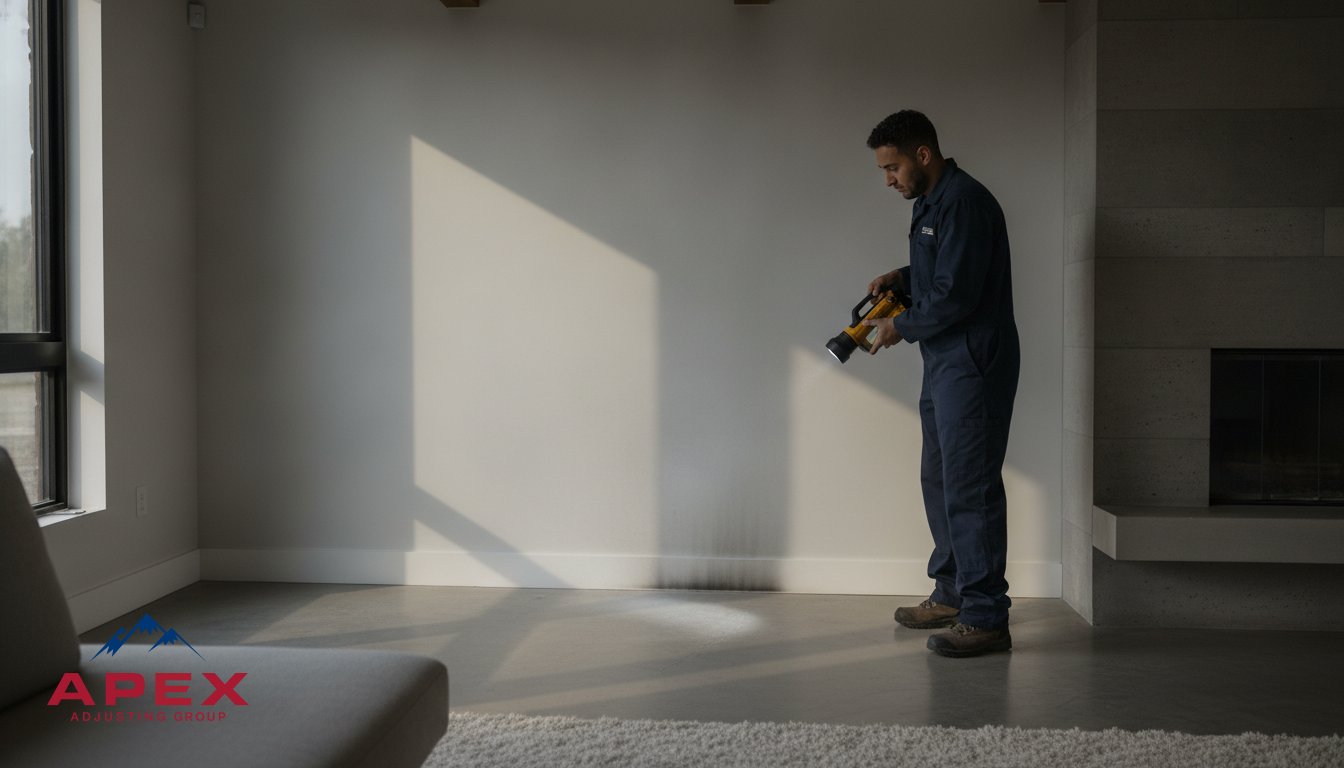
Insurance adjusters often rely on a "sniff test" to determine the extent of a loss. This isn't science; it's a cost-saving tactic. A successful smoke damage insurance claim requires objective proof of contamination. Look for "ghosting" patterns or thermal tracking. These dark streaks on walls indicate where smoke particles have been pulled toward cooler areas behind the drywall. Professional air quality testing and surface sampling are the only ways to prove the presence of hazardous residues in areas that look clean to the naked eye. Don't let an adjuster's subjective opinion dictate your family's safety or your business's future. Demand data, not guesses.
Exposing the Lowball: How Insurers Underestimate Smoke Claims
Insurers aren't in the business of maximizing your recovery. They're in the business of protecting their bottom line. When you file a smoke damage insurance claim, the adjuster’s first goal is often to minimize the scope of the loss. They rely heavily on the "Cleaning vs. Replacement" trap. This tactic involves claiming that porous materials like upholstery, carpets, and drywall can be "restored" with a simple wipe-down. In reality, these items often trap toxic residues that no amount of surface cleaning can remove. Replacing them is the only way to ensure safety, but replacement costs the carrier more. They'll push for the cheaper, ineffective option every time.
Don't be fooled by a "quick settlement" offer. Carriers often dangle an immediate check in front of policyholders to close the file before the full extent of the damage becomes apparent. Once you sign, it's significantly harder to reopen the claim for hidden soot found later in wall cavities or attic insulation. They also use "Scope of Work" manipulation. Adjusters frequently omit hard-to-reach areas from their estimates, hoping you won't notice the lack of decontamination in crawlspaces or behind cabinetry. Even when they acknowledge damage, they'll apply heavy depreciation to items saturated with smoke, treating a high-end asset as if it has zero value. Consult FEMA's guide to recovering from a fire to understand the standard recovery steps they might be skipping.
The "Preferred Vendor" Conflict of Interest
Your insurer will likely recommend a "preferred" restoration company. Be careful. These vendors often have pre-negotiated rates and standing agreements with the carrier. Their loyalty is often to the insurance company that provides them with steady work, not to your property's safety. There is immense pressure on these vendors to "clean" items that are technically non-restorable. They prioritize the insurer’s budget over your health. You have the legal right to choose your own independent restoration experts. Hiring someone who answers only to you is the first step in exposing a lowball offer. If you suspect your current estimate is too low, a free claim evaluation can reveal exactly what's missing.
The HVAC Trap: The Most Expensive Missed Item
The heating and cooling system is the lungs of your building. During a fire, smoke particles circulate through the ductwork and settle deep within the mechanical components. A simple filter change is a dangerous oversimplification. If soot is left inside the system, it will redistribute toxins every time the air turns on. Insurers hate paying for full duct replacement or deep mechanical cleaning because it’s expensive. However, professional fire damage services often reveal that anything less than a full system decontamination is a failure. Demand a mechanical inspection from a third-party expert to ensure your air is actually safe to breathe.
The Ultimate Smoke Damage Claim Checklist for 2026
Treat your recovery like a high-stakes investigation. Your insurance carrier is already building a case to pay you as little as possible. You must build yours to force a full payout. Documentation is the backbone of any smoke damage insurance claim. Start by securing the property immediately. Board up broken windows and cover roof openings to prevent secondary weather damage or theft. If you fail to mitigate the loss, the carrier will use that perceived negligence to deny portions of your benefits.
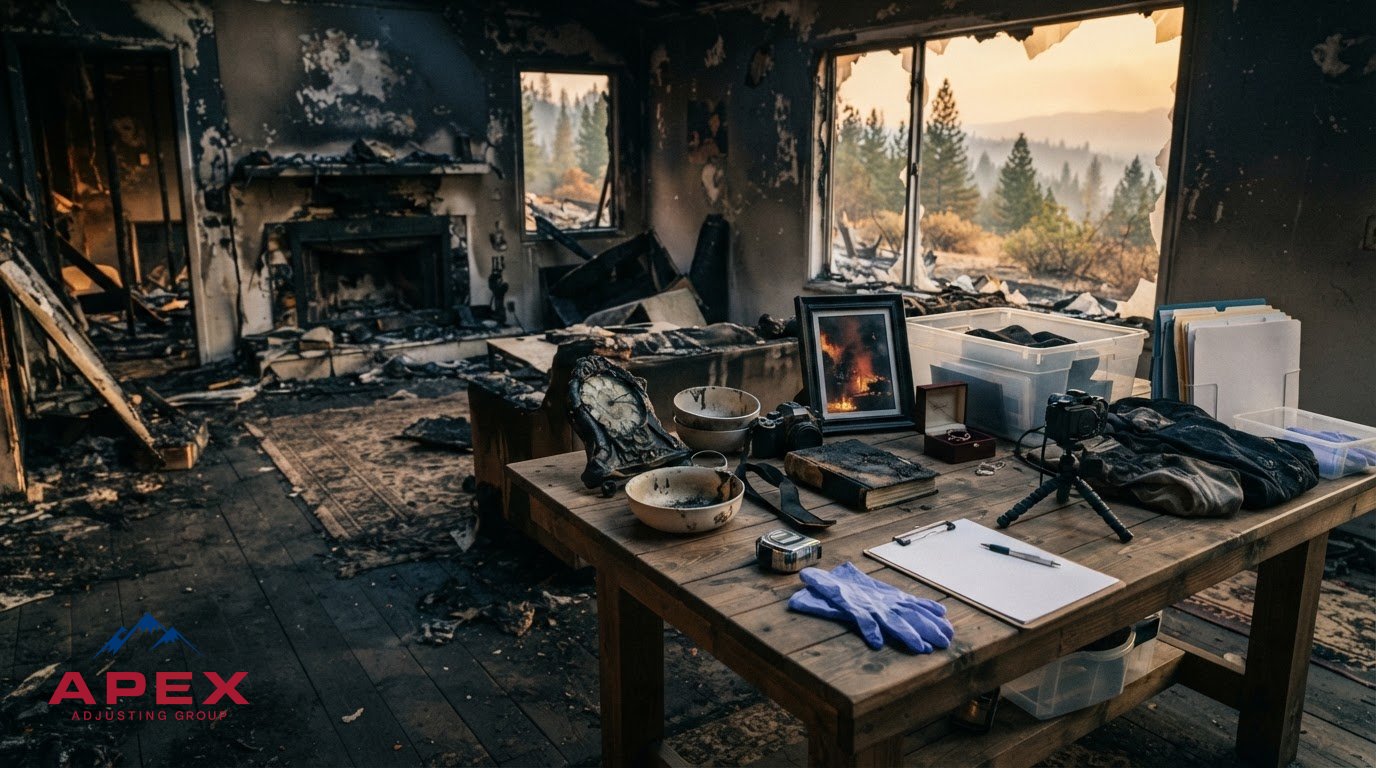
Move quickly to documentation. Don't just photograph the obvious charred remains. Capture high-resolution images of soot patterns inside dresser drawers, behind hanging art, and deep within closets. These indicators prove the reach of the chemical intrusion. Demand an industrial hygienist for air and surface sampling. They provide the scientific data needed to override an adjuster’s subjective visual inspection. Finally, maintain a meticulous communication log. Record every phone call, the name of every representative, and the specific time of every site visit. This paper trail is your primary leverage if the process stalls or turns combative.
Cataloging Your Personal Property (Contents)
Create a room-by-room inventory immediately. List every item, its age, original condition, and current replacement cost. Pay close attention to high-value porous items like silk curtains, wool area rugs, leather upholstery, and extensive book collections. Smoke particles embed themselves in these fibers, often making them part of the "Non-Restorable" category. If an item cannot be safely decontaminated to its pre-loss condition, it belongs in the replacement category, not the cleaning list. Don't let the insurer pressure you into cleaning items that will never be truly safe again.
Tracking Additional Living Expenses (ALE)
If you're displaced because your home or office is uninhabitable, your policy's ALE coverage is your lifeline. Track every receipt for temporary housing, restaurant meals, and even the increased fuel costs from a longer commute. Smoke-related displacement triggers this coverage because toxic particulates make the property unsafe for human occupancy. For more detailed strategies on maximizing these specific funds, read our guide on Fire Damage Insurance Claim Tips. Every dollar you spend during your recovery should be accounted for and submitted for reimbursement.
Navigating Disputes: What to Do for Underpaid Claims
Your first move is to strip away the ambiguity. Demand a full, line-itemized copy of the insurer’s estimate. If they offer a flat "cleaning fee," reject it immediately. You cannot challenge a lowball smoke damage insurance claim if you don't know exactly what they are omitting. Once you have the breakdown, compare it against your independent contractor’s scope of work. Look for the gaps we identified earlier, such as attic insulation or ductwork decontamination. Use specific rebuttal language: "Your estimate fails to account for the ANSI/IICRC S700 standards for scientific decontamination in non-living spaces." If the insurer ignores your evidence, issue a formal "Proof of Loss" statement. This is a sworn document that puts the carrier on notice. It forces them to either accept your valuation or provide a legal justification for their denial within a set timeframe.
The Power of the Insurance Appraisal Clause
When negotiations stall, you don't have to go to court. Most policies include an Appraisal Clause. This acts as a form of mini-arbitration to settle value disputes quickly. You hire an appraiser, the insurer hires an appraiser, and together they select a neutral umpire. A decision by any two of the three is binding. It’s a tactical strike that bypasses the insurer’s stalling tactics and forces a resolution based on the actual cost of recovery. Apex Adjusting Group provides professional appraisal services to represent your interests in these high-stakes sessions. It’s the most efficient way to break a deadlock and secure a fair price for your loss without the delays of a traditional lawsuit.
When to Walk Away from Direct Negotiation
Stop talking when the insurer starts playing games. Red flags include refusing to acknowledge independent air quality tests, ignoring your evidence for weeks, or offering "take it or leave it" settlements. These are signs of bad faith. At this point, direct negotiation is a waste of your time. You need an advocate who understands the system better than the adjuster does. A licensed public adjuster takes the burden of proof off your shoulders and manages the entire dispute from inspection to final check. Your goal isn't to just "settle" and move on. It’s to maximize your recovery so your property is actually safe to inhabit. If you're facing a deadlock, contact us for a free claim evaluation to see how we can force the insurer to pay what you deserve.
The Apex Advantage: Why You Need a Public Adjuster for Smoke Claims
You wouldn't enter a high-stakes courtroom without a professional, so why would you face a multi-billion dollar insurance company alone? A licensed public adjuster is your exclusive advocate. Unlike the adjuster sent by the carrier, our only loyalty is to you. Apex Adjusting Group manages every facet of your smoke damage insurance claim. We take the burden off your shoulders. We handle the forensic inspections, the complex paperwork, and the grueling negotiations. We stay with you from the initial damage assessment until the final check is in your hand. You focus on your recovery; we focus on the insurer.
Leveling the Playing Field
The adjuster sent by your insurance company has one job: protect the carrier's bottom line. They are trained to find "reasons" to categorize toxic soot as a minor cleaning issue. We level the playing field by providing a steady hand in a crisis. Our team brings specialized expertise to major hubs like Los Angeles, Phoenix, and Seattle. We understand the specific environmental factors and state regulations that impact your loss. Don't leave your financial future to the mercy of a corporate representative. Learn how to protect your assets in our pillar article: Fire Damage Insurance Claim: Don’t Let Your Recovery Burn. We are the champions of the underdog, and we don't back down from a fight.
Our Proven Process for Smoke Damage Recovery
Our process is built for maximization, not just settlement. First, we perform a deep-dive policy review to uncover hidden coverages your adjuster might "forget" to mention. Next, we generate a forensic damage estimate using Xactimate, the industry-standard software. We don't just look at surfaces. We document every microscopic particle and chemical intrusion. Finally, we engage in aggressive negotiation. We use the scientific data from our inspections to force the insurer to acknowledge the reality of your damage. We don't accept "good enough." We demand what is required to make your property safe to inhabit again.
We work on a contingency-based model. If there's no recovery, there is no fee. We only win if you win. This aligns our interests perfectly and removes the financial risk of hiring an expert. You get a seasoned professional to lead your recovery without any upfront costs. Stop fighting a losing battle against a system designed to underpay you. The insurer has a team of experts working against you. It's time you had a champion on your side. Get your free claim evaluation today and secure the settlement you actually deserve.
Secure Your Full Recovery and Force a Fair Settlement
You've seen how insurers minimize losses by ignoring the chemical reality of soot and ash. They count on you being overwhelmed by the complexity of your policy. Don't let them treat a toxic intrusion as a minor cleaning project. Your health and your property's value are at stake. A successful smoke damage insurance claim requires aggressive documentation and an unwavering demand for professional decontamination. You have the right to a home or office that is truly safe to inhabit.
You don't have to fight this battle alone. Apex Adjusting Group serves as your dedicated advocate across CA, AZ, WA, and the Western US. We bring expert witness and appraisal services to the table to ensure you aren't silenced by corporate stalling. We operate on a contingency basis. There's no recovery and no fee. It's time to stop the lowballing and take back control of your recovery. Get a Free Claim Evaluation from Apex Adjusting Group today. Your peace of mind is worth the fight, and we're ready to lead the charge.
Frequently Asked Questions
Does homeowners insurance cover smoke damage if there was no fire in my house?
Yes, your homeowners policy typically covers smoke damage regardless of where the fire started. This includes smoke from a neighbor's kitchen fire or the massive wildfires that frequently impact Southern California and Arizona. You must prove the smoke caused a physical loss, such as chemical residue in your wall cavities. Don't let the adjuster dismiss the claim just because the flames didn't reach your property. It's about the intrusion.
How long do I have to file a smoke damage insurance claim?
Deadlines are governed by your policy and state statutes. In California, you typically have one year to notify your insurer, though new standards like AB 1795 demand insurers inspect smoke damage within 30 days of a claim. In states like Arizona or Idaho, waiting too long allows the carrier to argue the damage is unrelated to the fire event. File your smoke damage insurance claim immediately to ensure your evidence remains fresh and undeniable.
Can I clean smoke damage myself or should I hire a professional?
Hire a professional restoration team. Soot is acidic and binds to surfaces at a molecular level, meaning standard household cleaners won't work. If you try to scrub it yourself, you risk pushing the toxins deeper into your furniture and drywall. Experts in cities like Seattle or San Jose use specialized equipment to remove PM2.5 particles. This ensures your air is safe to breathe and prevents long-term corrosion of your high-end electronics.
What happens if my insurance company denies my smoke damage claim?
A denial is just the beginning of the fight. Demand a detailed letter explaining the exact reason for the denial. Many insurers deny claims because their adjuster didn't see enough soot. This is when you bring in a public adjuster to conduct a forensic inspection. We use scientific testing to prove the damage exists, which often forces the carrier to reverse their decision and pay for the necessary decontamination of your property.
Is smoke damage covered by renters insurance?
Renters insurance covers your personal property against smoke damage. If a fire in a nearby unit sends smoke into your apartment in Phoenix or Oakland, your policy should pay to clean or replace your belongings. It also covers your additional living expenses if you have to move out during the decontamination process. Document every damaged item and keep receipts for your temporary housing to ensure you receive your full benefits from the carrier.
How is the value of my smoke-damaged belongings determined?
Value is based on your policy's Replacement Cost Value or Actual Cash Value provisions. Insurers love to use depreciation to slash your payout on smoke-saturated furniture and clothes. They might argue that a smoke-saturated sofa is still functional after a cheap cleaning. You must counter this with a detailed inventory that proves the items are non-restorable. Providing original receipts and current market prices helps us maximize the value of your settlement in a dispute.
Should I accept the first settlement check the insurance company offers?
Don't accept it. The first check is usually a lowball offer intended to settle your claim before you realize the true extent of the loss. It rarely covers expensive line items like HVAC decontamination or attic insulation removal. If you sign a release or cash a check marked full payment, you could lose the ability to seek more money later. Always have an expert review the estimate first to ensure it's complete.
What is an industrial hygienist and do I need one for my claim?
An industrial hygienist is an expert who tests for toxic particulates and air quality. You absolutely need one if the insurance company claims your home is clean despite a lingering smell. They provide the objective, scientific data that proves your property is contaminated with soot and hazardous chemicals. Their reports are the primary weapon we use to defeat an adjuster’s subjective opinion and secure the funds needed for professional decontamination of your space.
Need Help with Your Insurance Claim?
Our licensed public adjusters can help you get the maximum settlement you deserve. Contact us today for a free claim evaluation.
Related Articles